
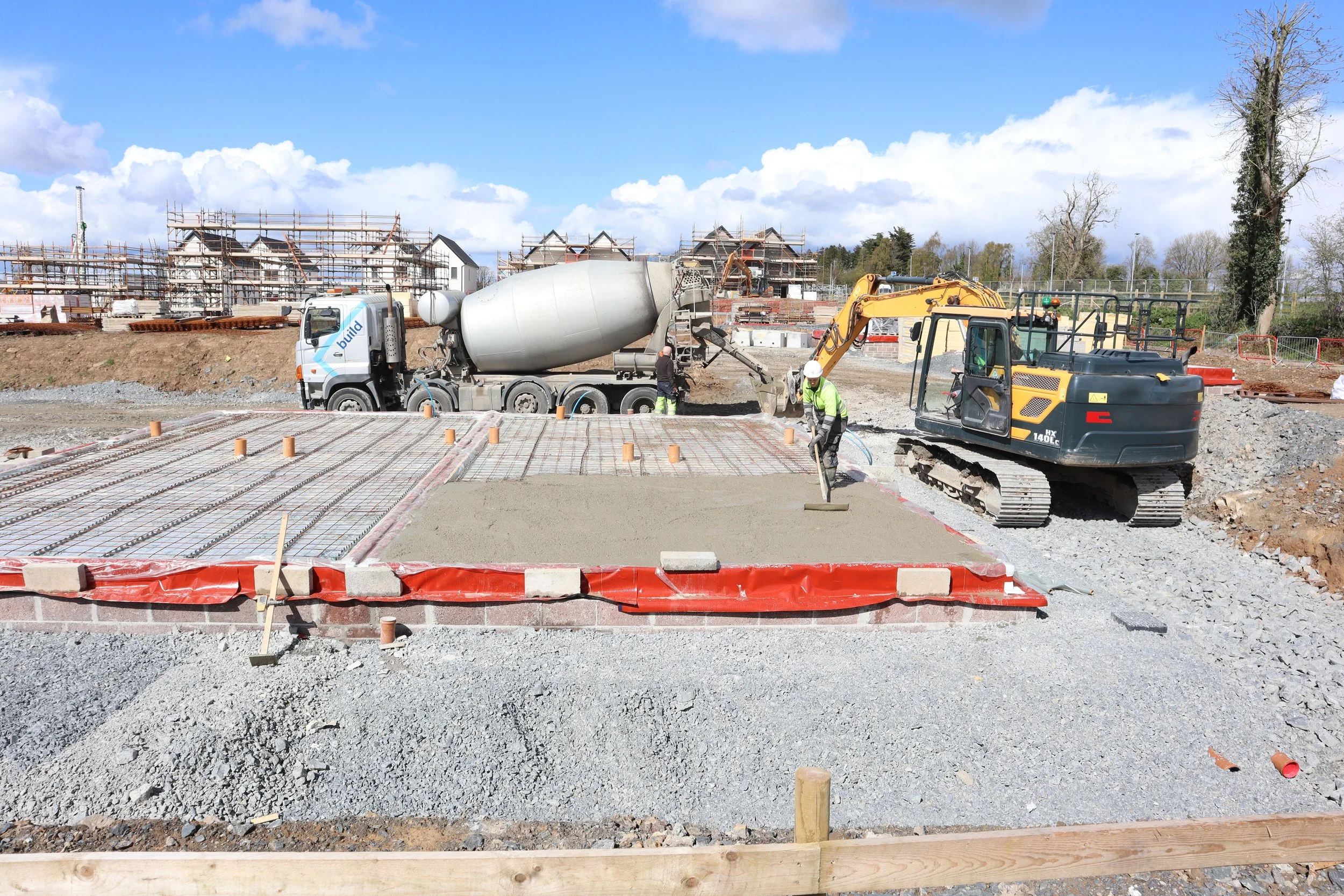
A new Construction Technology textbook is in development
Written for the revised Leaving Certificate Construction Technology specification.
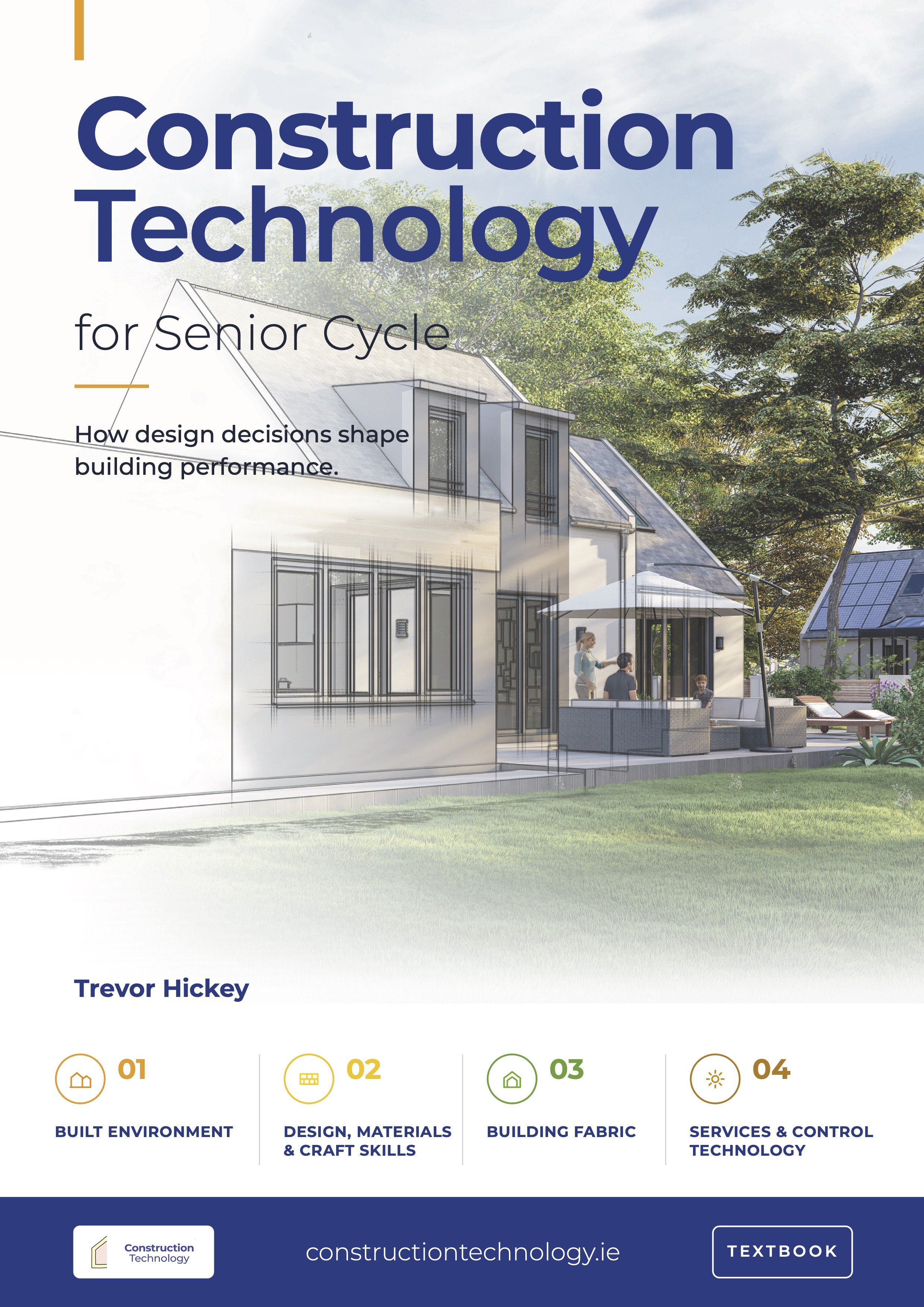
A new Construction Technology textbook, written for the revised Leaving Certificate course — and built around the specification from the first page, not adapted from an older book.
I'm writing it as someone with decades of experience teaching this subject and over ten years marking the State examinations, so it's shaped by how the course is actually taught and assessed — not just what's on the specification.
At its heart is a simple idea: that good building is about the choices a designer makes, and that every choice has a real, measurable effect on how a home performs and how comfortable it is to live in. That idea runs through the whole book.
It builds on my earlier books, Construction Studies Today and Construction Technology: Designing Sustainable Homes, and it's made specifically for the new course and the way it will be taught and assessed.
Where it stands
The full text is written, and the book is now in the artwork and diagram stage. I'm doing that work myself, and I'd rather take the time to get the diagrams genuinely right than rush a book out to hit a date. I'll post progress here as it develops — register your interest above and I'll keep you posted. Here's the new cover!
Here's the new cover!
Last updated: July 2026
Why this book is different
Most textbooks work through the course one topic at a time — a chapter on foundations, a chapter on walls, a chapter on roofs. Students can finish every chapter and still not see how it all fits together.
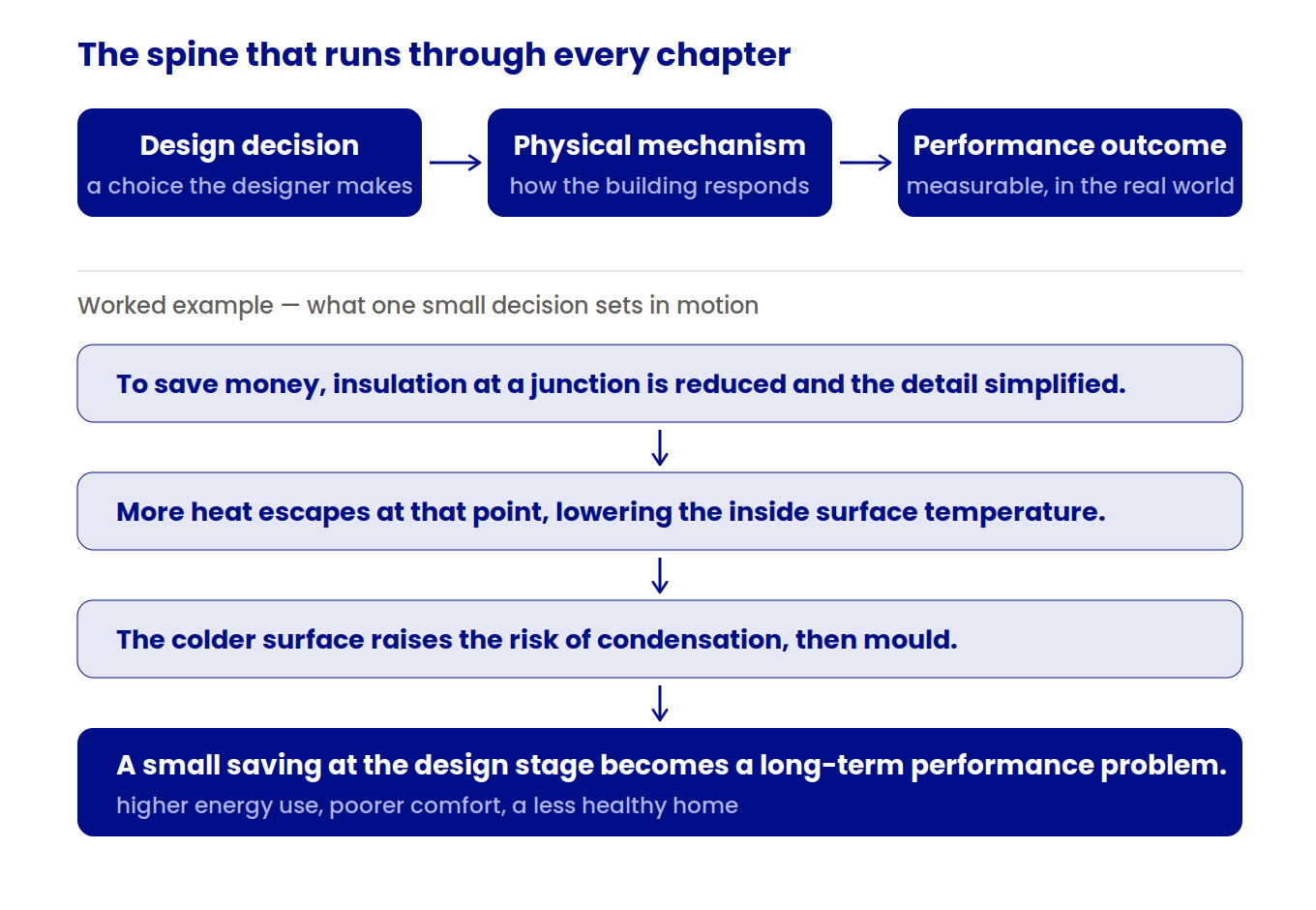
This book is built differently. It follows one simple idea the whole way through: every design decision a builder makes has a knock-on effect you can measure — on how warm a home is, how much energy it uses, how long it lasts.
Once students can follow that chain — decision, mechanism, outcome — the whole subject clicks into place. They stop memorising how buildings are put together and start understanding why they behave the way they do. Sustainability and the Building Regulations run through every chapter as part of that reasoning, not as bolt-on topics, and the diagrams are built to explain rather than decorate.
How every chapter is built
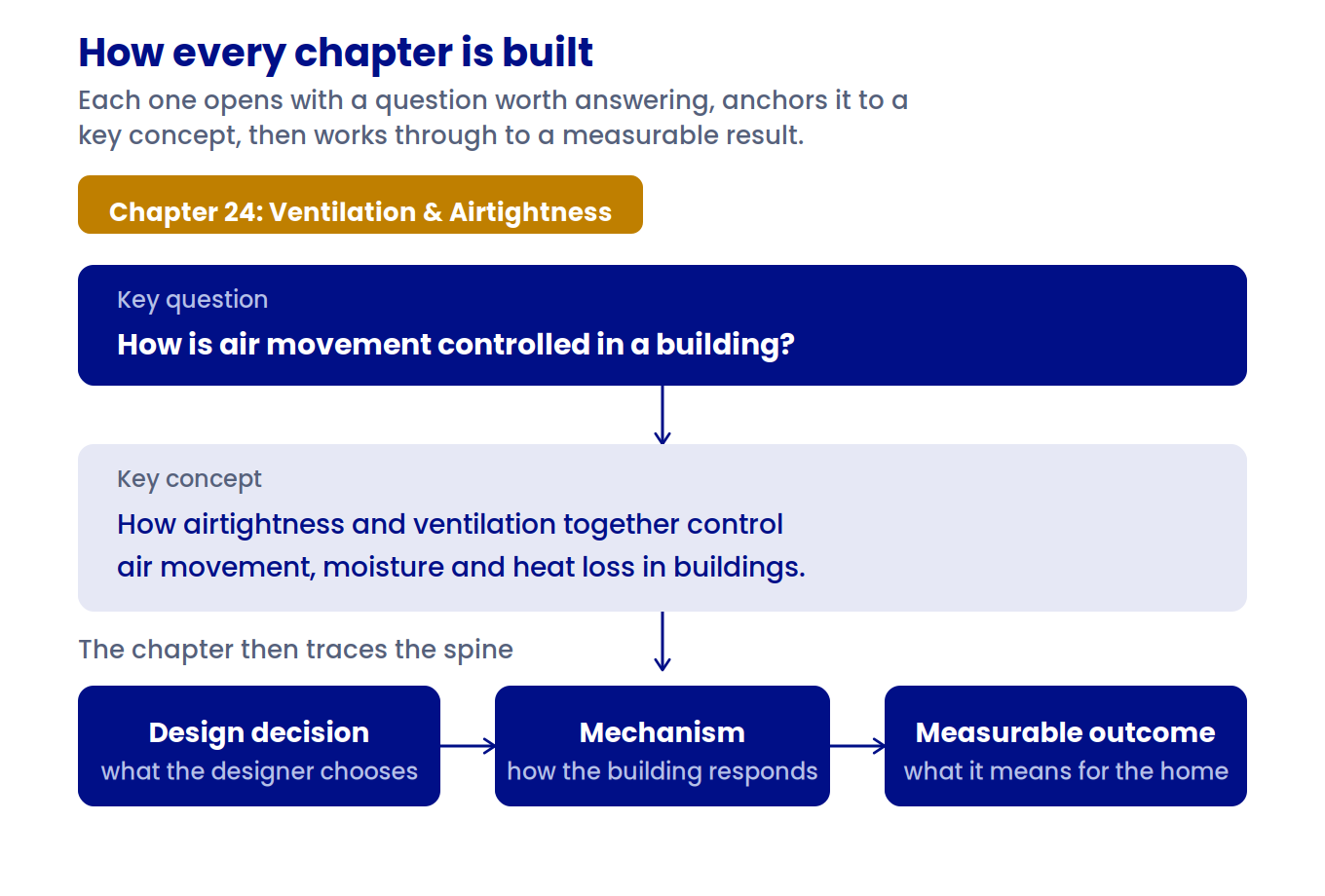
Every chapter opens the same way — with a real question worth answering, and one big idea to hold onto. From there it works through to something measurable.
It's a structure students quickly come to trust. They always know what a chapter is asking, why it matters, and where it's heading — which makes the subject far easier to teach and to revise.
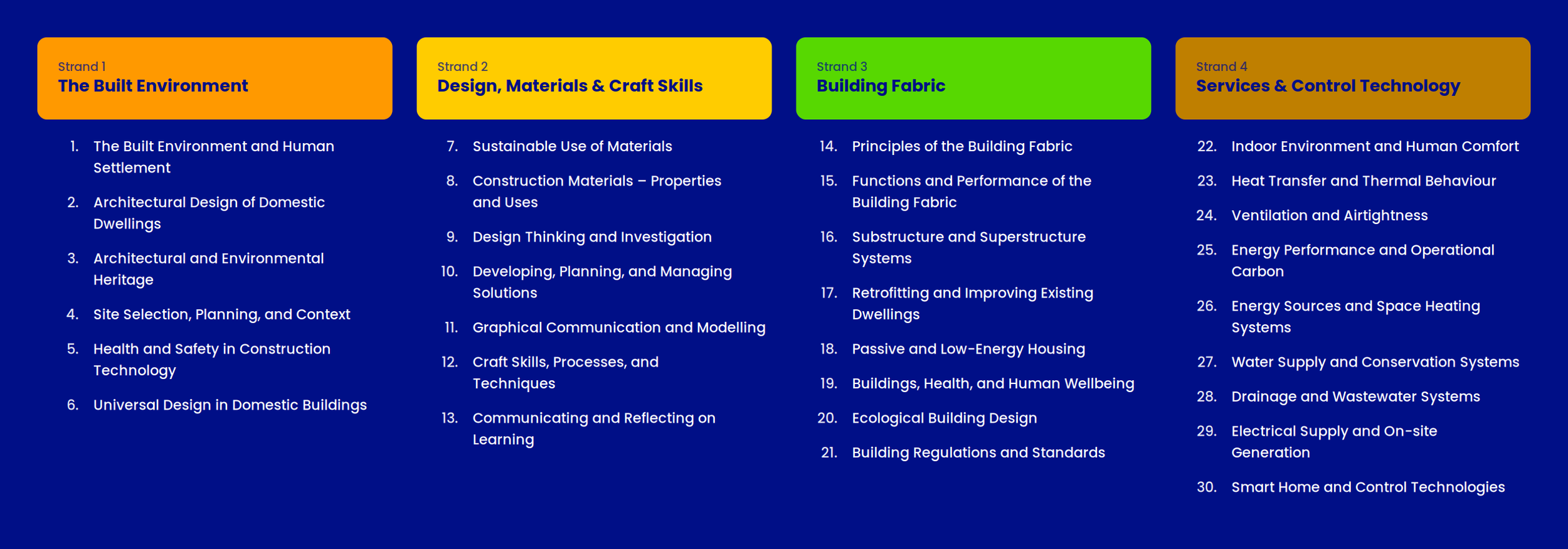
Thirty chapters, across the four strands of the specification. Each one names the shift in thinking it's designed to bring about — not just the topic it covers.
Built around the new specification — not adapted to it
More than a textbook
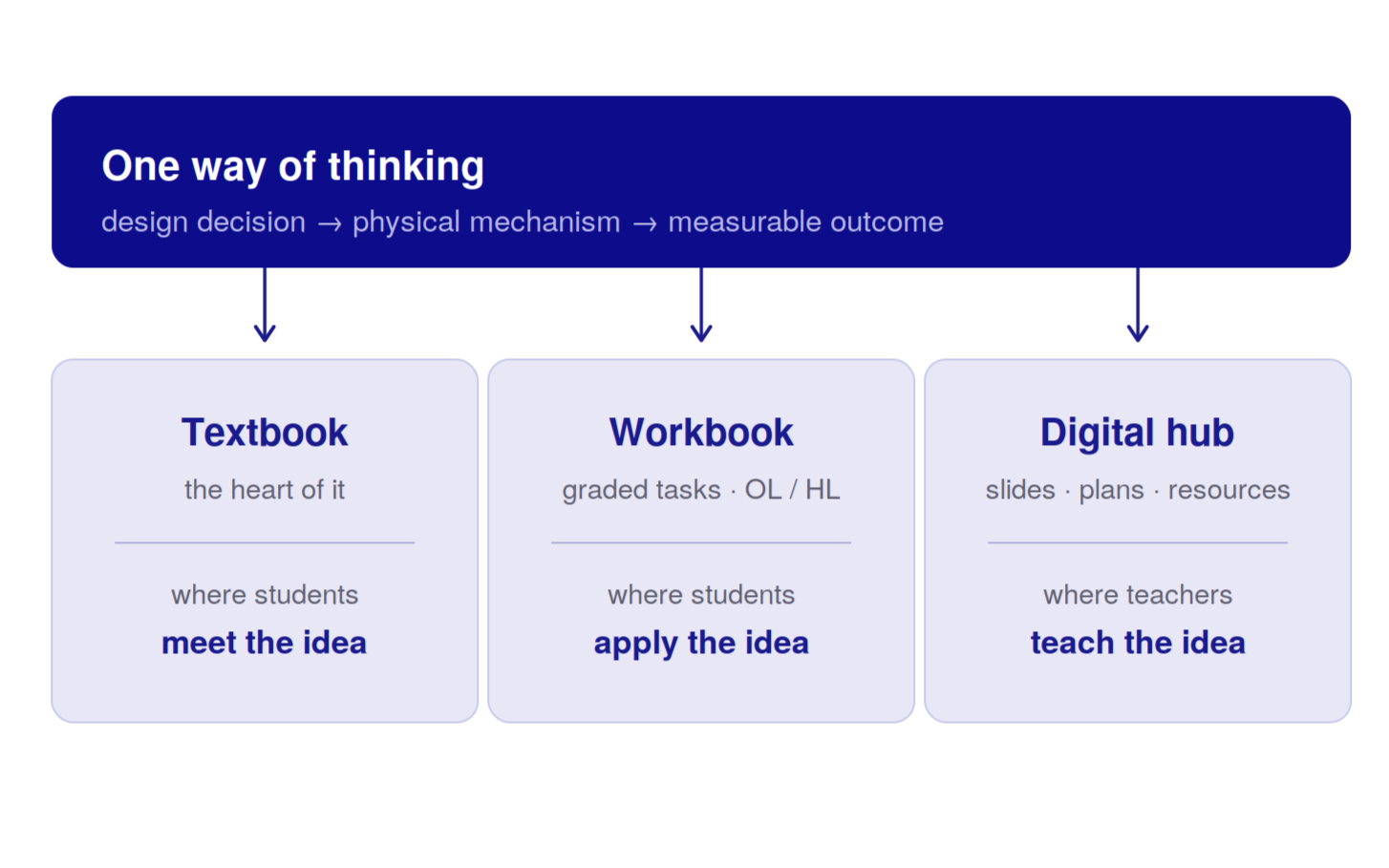
The textbook is the heart of it, but it doesn't work alone.
The workbook gives students graded tasks and exam practice, with clear separation between Ordinary and Higher level. The digital hub gives teachers ready-to-use slides, 3D models, lesson plans and assessment supports for every chapter.
What ties them together is the thing that makes the book distinctive: all three are built on the same way of thinking. A student meets one clear approach in the textbook, practises it in the workbook, and is taught it from the resources — so nothing pulls in a different direction.
Some books cover the topics. This one is built around the course your students will actually sit.
Starting from the specification, rather than reaching for it afterwards, shapes everything — the structure, the language, the way assessment is woven in from the start.
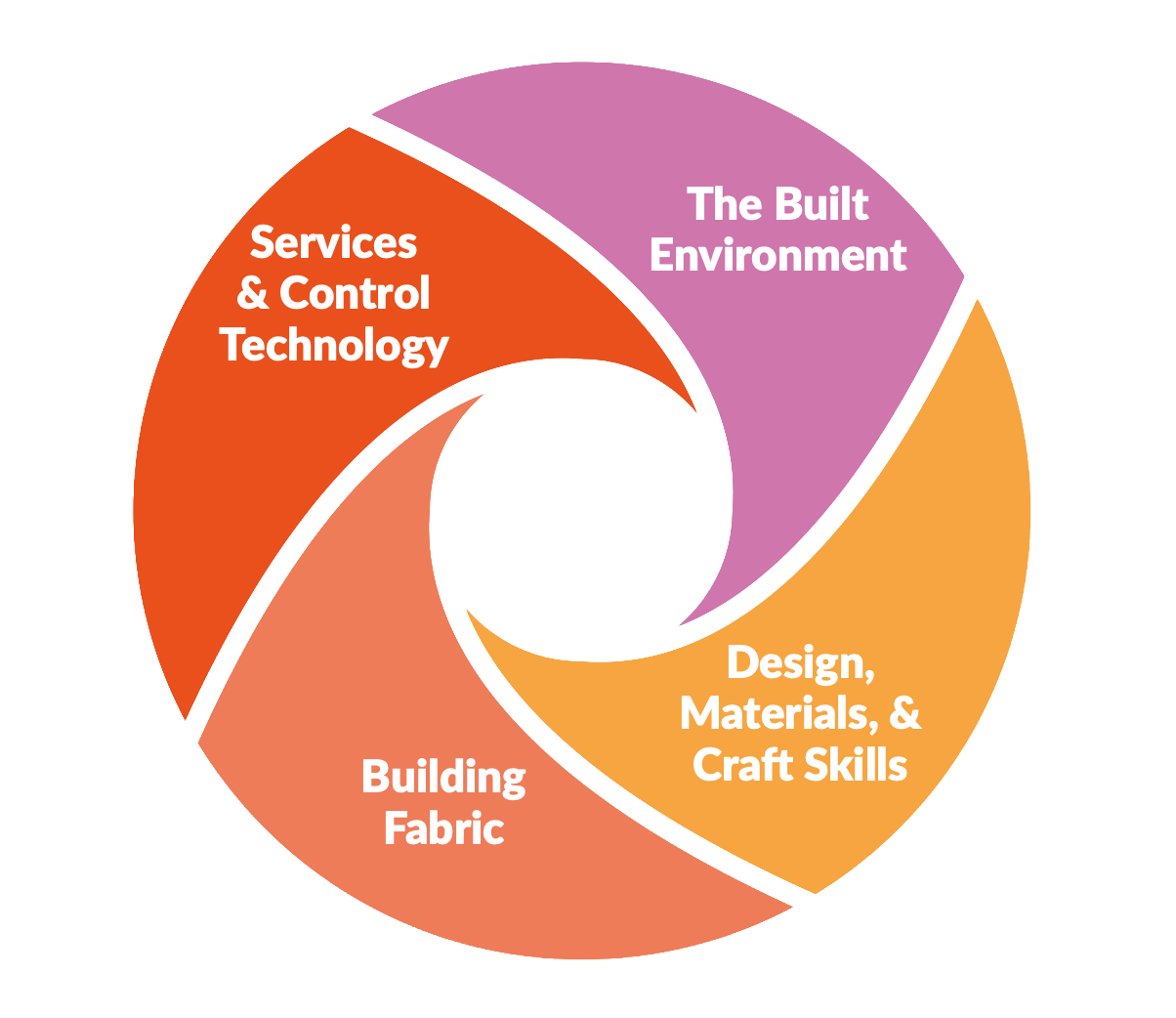
✓ Organised by the four strands — The Built Environment; Design, Materials and Craft Skills; Building Fabric; and Services and Control Technology. The book follows the specification's own structure, so your planning maps straight onto it.
✓ Speaks the specification's language — learning outcomes, key competencies and the integrated, non-linear way the strands connect are built into how each chapter is written, not bolted on afterwards.
✓ The same course for every student — shared core content with differentiation through graded tasks, exactly as the specification intends at Ordinary and Higher level.
✓ Assessment from day one — the written examination (50%), Exploring the Constructed Environment (30%) and the Craft Skills Assessment (20%) are designed for from the first chapter, not crammed in at the end.
✓ Written for this course, by someone who teaches it — made for the specification students will actually sit, in the Irish context they'll actually build in.
Register your interest
Planning ahead for the new course? I'd love to hear from you.
Leave your details and I'll keep you posted as the book develops — and I'm always glad to hear teachers' thoughts on how this subject is best taught.
Email me directly, or use the form, whichever suits.
trevor@constructiontechnology.ie